
Kitten Care Guide for Indian Climate (2025 Vet-Safe Playbook for Monsoon, Summer & Winter)
Quick truth before we start
Raising a kitten in India is very different from raising one in Europe or the US. Our climate, humid monsoons, scorching summers, and chilly dry winters affect everything: from how often you feed and bathe to what products are safe, when vaccinations should be given, and how to prevent infections.
This is your step-by-step playbook for Indian conditions in 2025, built with the latest vet-approved data. Whether you’re caring for a newborn, a rescued street kitten, or a growing 6-month-old, this guide gives you the exact routines, climate-smart solutions, and product suggestions that Indian cat parents can trust.
Part 1: Seasonal Health Risks for Kittens in India
Kittens are far more vulnerable to climate stress than adult cats. Their immune systems are immature, their ability to regulate temperature is limited, and they’re prone to infections. Let’s break down the three major Indian seasons and what you need to prepare for.
Monsoon Season: Humidity, Fungal Growth & Parasites
- Respiratory infections in kittens during the monsoon surge because humidity makes viruses like calicivirus spread more easily. Watch for sneezing, watery eyes, or nasal discharge.
- Fungal infections (ringworm & Malassezia dermatitis) thrive in damp environments. Studies show up to 55% higher fungal infection rates in cats during monsoon months.
- Flea & tick infestations in India increase by 40–60% in metros like Mumbai, Chennai, and Goa. Damp fabrics, mats, and shaded balconies are hotspots.
- Gastrointestinal issues are common due to food spoilage and contaminated water.
Product-backed tip: If your kitten develops itchy patches or flaky skin during monsoon, switch baths to an antifungal option like Himalaya Erina EP Cat Shampoo. Its neem + eucalyptus formula soothes skin and prevents fungal spread. Always dry thoroughly with a microfiber towel and use a Pet Heating Pad, if the weather is damp, to keep your kitten’s body warm post-bath.
Summer Season: Heat Stress & Dehydration
- Kittens cannot regulate body temperature effectively until they’re about 5 weeks old. Even older kittens can overheat in Indian summers.
- Dehydration risk is high, especially in kittens fed mostly dry food. They need diets with 80% moisture content in hot weather.
- Urinary tract infections in kittens can develop if kittens don’t drink enough water, as concentrated urine irritates the bladder.
Product-backed tip: Switch at least 1–2 meals daily to wet food like Whiskas Junior Pouches. They provide high moisture content, making hydration easier in summer heat. For long, hot days, a Cooling Mat for Pets placed in their resting area can prevent heat stress.
Winter Season: Hypothermia & Weak Immunity
- Newborn kittens cannot maintain their own body temperature until about 3 weeks old.
- They require an ambient temperature of 29–32°C, which is challenging during Indian winters, especially in North India.
- Hypothermia is a critical emergency. Symptoms: cold ears/paws, lethargy, refusal to suckle.
- Appetite can dip in colder months, reducing calorie intake just when energy is needed most.
Product-backed tip: Place a Pet Heating Pad under your kitten’s bedding for consistent warmth. Always cover it with a cloth to avoid burns. Combine with a Royal Canin Mother & Babycat Food, designed for fragile kittens needing easy-to-digest calories.
Part 2: Feeding & Weaning Schedule for Kittens in India (0–6 Months)
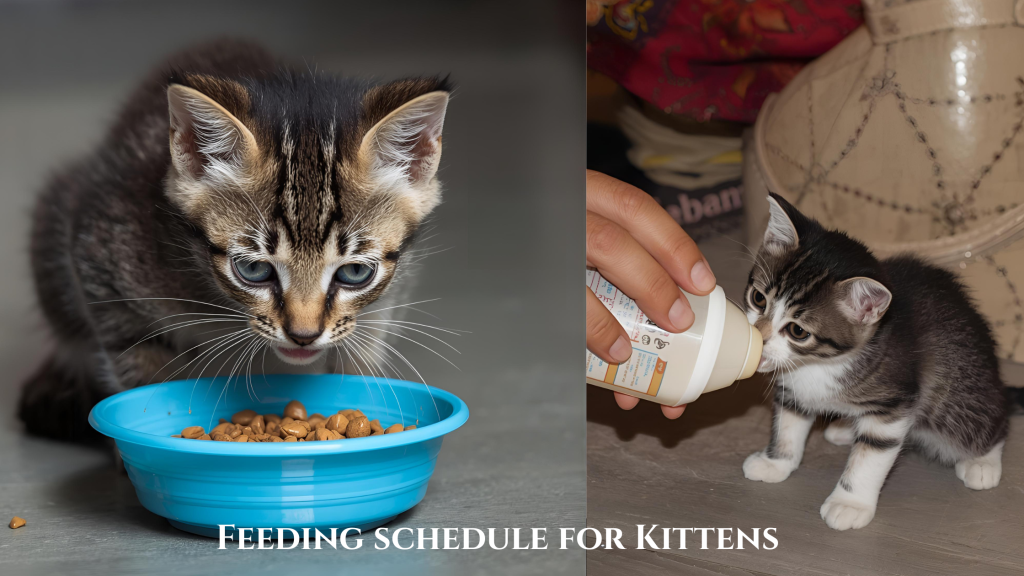
Feeding is the single most critical aspect of kitten survival. Using the wrong milk (like cow’s milk) or feeding at the wrong temperature is one of the top causes of diarrhea and dehydration in Indian kittens.
Here’s the vet-approved 2025 feeding chart, adapted for Indian conditions:
0–1 Week Old (Newborns)
- Frequency: Every 2–3 hours, day and night (8–10 feedings daily).
- Amount: 2–6 ml per feeding.
- Formula temperature: 35–38°C (warm to body temperature).
- Environment: Maintain 29–32°C room temperature with heating pads.
Product-backed tip: Use Royal Canin Babycat Milk or KMR Kitten Milk Replacer. Mix only small amounts at a time with boiled and cooled water to prevent contamination. Feed with a kitten nursing bottle, never a human spoon or syringe, to avoid aspiration pneumonia.
1–2 Weeks Old
- Frequency: Every 3–4 hours.
- Amount: 10–14 ml per feeding.
- Environment: Keep the room at ~30°C; kittens can still chill quickly.
Pro tip: At this stage, kittens start wriggling more. Use a kitten-safe nursing bottle with a small nipple for safe feeding control. Continue with Royal Canin Babycat Milk as the base formula.
2–3 Weeks Old
- Frequency: Every 4 hours.
- Amount: 12–22 ml per feeding.
- Environment: Room temperature can be slightly cooler (~28°C), but keep heating support at night.
- Milestone: Eyes fully open, ears upright, and teeth may start erupting.
Product-backed tip: Introduce a kitten formula-weaning bowl if your kitten starts lapping milk. Keep using KMR or Royal Canin Babycat Milk, but start reducing bottle feeds gradually.
3–4 Weeks Old
- Frequency: 4–5 times daily.
- Amount: 15–25 ml formula per feeding.
- Milestone: Start offering wet kitten food mixed with formula.
Product-backed tip: Transition to Royal Canin Mother & Babycat Wet Food. Mix one teaspoon of wet food into the formula until the kittens adjust. Use a shallow feeding dish to prevent choking.
4–8 Weeks Old
- Frequency: 4–6 meals daily.
- Food: Mostly solid kitten food, both wet and dry.
- Hydration: Provide clean, boiled-cooled water.
- Milestone: Full weaning by 6–9 weeks.
Product-backed tip: Shift to Whiskas Junior Cat Food or Farmina Matisse Kitten. For long-haired breeds like Persians, Royal Canin Persian Kitten Food helps with coat health.
2–6 Months Old
- Frequency: 4–6 meals daily.
- Food: High-quality dry food supplemented with wet meals.
- Calorie needs: Very high; kittens are in rapid growth.
- Hydration: Always provide fresh water, especially in summer.
Product-backed tip: Use Royal Canin Second Age Kitten Dry Food as a daily staple, but rotate with wet meals to maintain hydration.
Part 3: Vaccinations, Deworming, Grooming & Hygiene
Vaccination Schedule & Costs in India (2025)
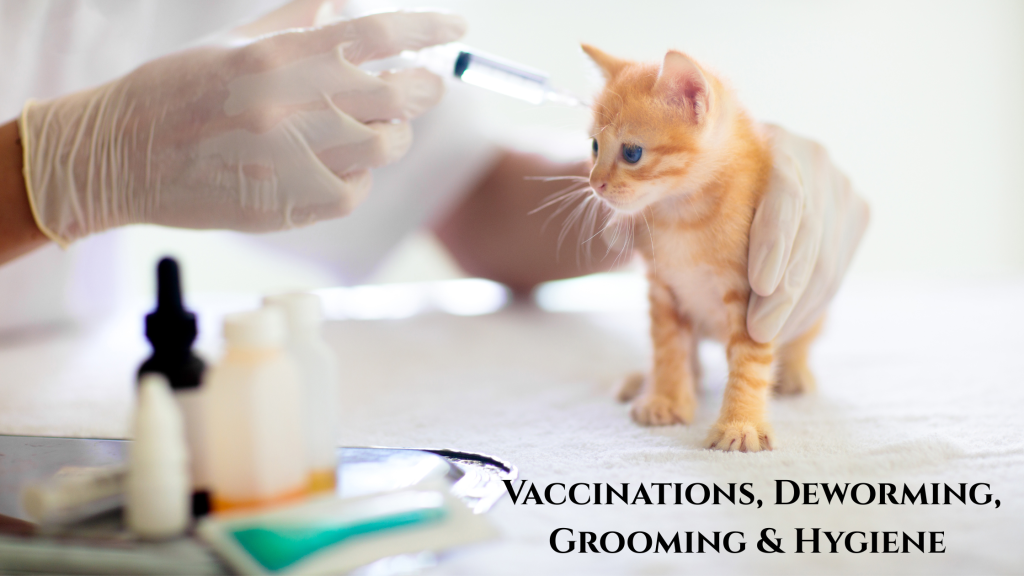
Kittens are highly vulnerable to viral diseases in India, especially during the monsoon when infections spread faster. A strict vaccination schedule for kittens is non-negotiable.
Standard 2025 Indian Vaccination Timeline
- 60 Days (8–9 weeks): First CRP (Feline calicivirus spread in humid climates, Rhinotracheitis, Calicivirus, Panleukopenia).
- 90 Days (12–13 weeks): Second CRP + First Rabies.
- 120 Days (16–17 weeks): Final CRP + Rabies booster.
- Annual Boosters (after 1 year): CRP + Rabies. Cost.
Pro Tip: Never allow kittens outdoors or with unvaccinated cats before all 3 CRP doses are complete.
Product-backed tip: To track vaccine schedules, use a Pet Health Record Book. Write down batch numbers, vet names, and due dates; it helps avoid missed boosters.
Deworming & Parasite Prevention
Intestinal worms and external parasites are rampant in India. Left unchecked, they cause anemia, stunted growth, and chronic diarrhea in kittens.
Deworming Schedule (Vet-Recommended)
- 4–6 Weeks: First deworming.
- 8–10 Weeks: Second dose before final vaccinations.
- 3–6 Months: Monthly deworming.
- 6+ Months: Every 3 months for life.
Product-backed tip: Many vets recommend Tail and Collar Club Puppy & Kitten Deworming Syrup; palatable and easy to administer. Always confirm the dose with your vet by weight.
- 6–8 Weeks Old: Vet may approve kitten-safe topical spot-ons (e.g., selamectin-based).
- Avoid permethrin-based products (common in dog products; toxic to cats).
- Monsoon Tip: Flea infestations rise 40–60%—daily flea combing + herbal baths prevent outbreaks.
Product-backed tip: Use a Flea Comb for Cats daily during the monsoon. For natural prevention, Caredom Herbal Kitten Shampoo is neem-based and gentle enough for young kittens.
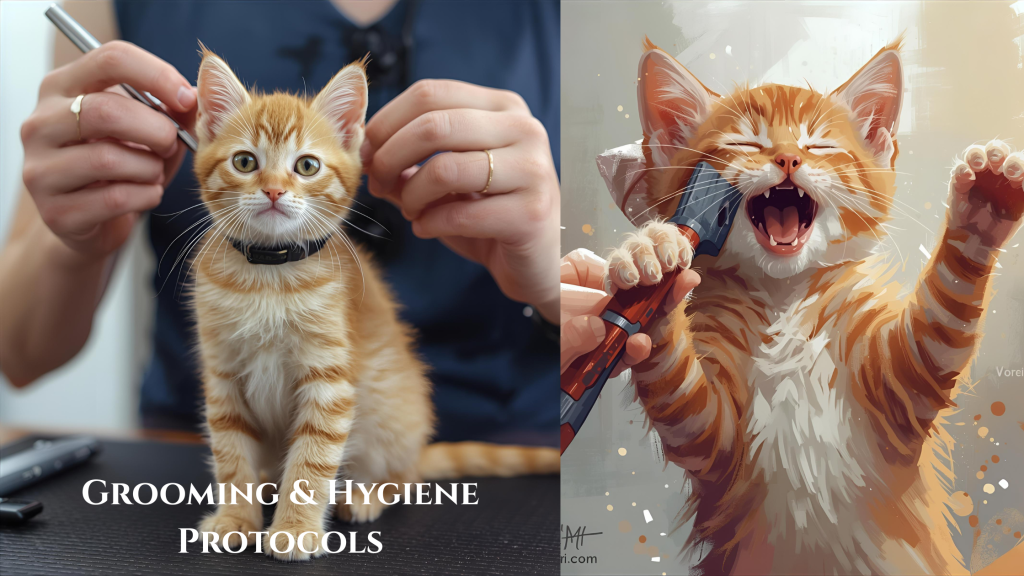
Grooming & Hygiene Protocols for the Indian Climate
Kittens don’t need frequent baths, but in India’s climate, smart grooming prevents fungal, bacterial, and parasite issues.
Monsoon Grooming Routine
- Bathing: Once every 2–3 weeks with antifungal shampoo (if needed).
- Drying: Use microfiber towels + low-heat dryers to avoid dampness.
- Ear Care: Clean weekly with vet-approved solutions to prevent yeast buildup.
- Paw Care: Always wipe paws after wet exposure; fungi hide between toes.
Product-backed tip: For monsoon baths, Himalaya Erina EP Shampoo is a vet-trusted herbal antifungal. Follow up with a Microfiber Pet Towel to dry thoroughly.
Summer Grooming Routine
- Brushing: Daily brushing prevents matting and helps spot ticks early.
- Bathing: Limit baths to once monthly; focus on hydration instead.
- Heat Relief: Keep kittens indoors during peak heat hours (12–4 PM).
Product-backed tip: For daily brushing, use a Kitten Slicker Brush, with gentle pins remove loose fur without hurting delicate skin. Place a Cooling Mat in their rest area for comfort.
Winter Grooming Routine
- Bathing: Avoid full baths unless necessary. Use waterless cleansers.
- Brushing: Weekly brushing is enough for short-hairs; more frequent for Persians.
- Warmth: Provide fleece blankets and draft-free bedding.
Product-backed tip: In cold months, use Caredom Dry Shampoo Spray instead of wet baths. Combine with a Pet Heating Pad to keep kittens warm during grooming.
Seasonal Hygiene & Home Care
Healthy kittens need a clean environment, especially in Indian households where humidity and dust accelerate infections.
- Monsoon: Wash bedding every 3–4 days; sun-dry when possible. Use a pet-friendly Dehumidifier in kitten rooms to prevent fungal growth.
- Summer: Keep multiple water bowls across the home; avoid metal bowls that overheat.
- Winter: Line bedding with fleece or wool; elevate sleeping areas off cold floors.
Product-backed tip: For food/water hygiene, switch to Stainless Steel Cat Bowls with Anti-Slip Base, easier to sanitize than plastic, and prevents bacterial buildup.

Nutrition for Growing Kittens in the Indian Climate
Kittens grow 15x faster than human babies in their first year. Diet during this stage directly affects immunity, bone strength, and coat health.
Feeding Essentials (0–6 Months)
- Newborn to 4 Weeks: Only kitten milk replacer (KMR or Royal Canin Babycat Milk).
- 4–8 Weeks: Begin weaning with wet kitten food mixed with formula.
- 8 Weeks–6 Months: Shift to high-protein kitten food, 4–6 meals daily.
Product-backed tip:
- Royal Canin Babycat Milk, a safe cow’s milk alternative; feed every 2–3 hours.
- Royal Canin Mother & Babycat Dry Food, designed for weaning kittens.
- Whiskas Junior Wet Pouches, moisture-rich and affordable hydration support for Indian summers.
Protein & Hydration Needs
- Protein: Kittens need at least 36–40% protein in their diet for muscle growth.
- Hydration: 80% moisture content is crucial in Indian summers and monsoons.
- Food Temperature: Always serve food at room temperature—not refrigerated—to avoid digestive stress.
Product-backed tip:
- Farmina Matisse Kitten Food: high-protein (32%), digestible for Indian cats.
- Purina Pro Plan Kitten: Fortified with DHA for brain development.
First-Year Health Milestones
Tracking milestones ensures you never miss critical vet visits.
- 6–8 Weeks: First vaccination + weaning complete.
- 3 Months: Second vaccination + rabies shot.
- 4 Months: Final boosters + deworming.
- 6 Months: Spay/neuter (recommended before first heat for females).
- 1 Year: Booster vaccines + transition to adult feeding schedule.
Product-backed tip: Use a Pet Calendar Planner to record milestones and sync reminders with vet visits.
Emergency Recognition Guide
Kittens can decline very quickly, and knowing red flags can save lives. Learn more about Emergency symptoms in kittens that need a vet immediately.
Call the vet immediately if your kitten has:
- Body temperature below 35°C or shivering (hypothermia).
- Refusal to eat for more than 6 hours in kittens <4 weeks.
- Diarrhea lasting >24 hours (risk of dehydration in kittens).
- Labored breathing, wheezing, or nasal discharge.
- Sunken eyes, skin tenting (classic dehydration signs).
- Inability to urinate or defecate for 24+ hours.
Product-backed tip: Keep a Digital Pet Thermometer at home to check temperatures safely during emergencies.
FAQs
Q1: What should I feed a newborn kitten in India?
Only kitten milk replacer (KMR or Royal Canin Babycat Milk). Never cow’s milk—it causes diarrhea. Feed every 2–3 hours, even at night.
Q2: How much does a kitten vaccination cost in India in 2025?
Complete first-year vaccination: ₹3,999–5,065 at premium clinics like Vetic. Individual CRP shots cost ₹650–1,249, rabies shots cost ₹300–699. Annual boosters cost ~₹1,899.
Q3: When can kittens start eating solid food?
Begin weaning at 3–4 weeks with wet food mixed with milk replacer. Fully transition by 6–9 weeks.
Q4: How do I keep my kitten warm in winter?
Maintain 29–32°C for newborns using a Pet Heating Pad. Provide fleece blankets and draft-free sleeping areas.
Q5: Can indoor kittens in India get fleas or ticks?
Yes. Fleas hitchhike via humans, shared corridors, or balcony mats. Prevention: daily flea combing + herbal kitten shampoo during monsoon.
One-Page Printable Summary
Today:
- Feed kitten milk replacer or high-quality kitten food.
- Groom with a slicker brush; clean paws daily in the monsoon.
- Track temperature and appetite closely.
This Week:
- Wash bedding twice a week; sun-dry in the monsoon.
- Brush daily in summer to reduce shedding.
- Use heating pads or fleece blankets in winter.
This Month:
- Stay on schedule with vaccinations and deworming.
- Introduce wet kitten food for hydration in summer.
- Monitor for fungal or respiratory issues in the monsoon.
Always:
- Never give cow’s milk.
- No dog products (especially permethrin).
- Maintain hygiene: bowls, litter boxes, and bedding.

Vet-Level Takeaways for Indian Cat Parents
- Seasonal adaptation is non-negotiable: monsoon = fungus & fleas, summer = dehydration, winter = hypothermia risk.
- Nutrition must be climate-adjusted: prioritize hydration in summer, antifungal grooming in monsoon, warmth in winter.
- Vet partnership is essential: vaccines, deworming, and emergencies can’t be DIY.
- Product choices matter: buy cat-specific, vet-approved items from trusted sellers