
Cat Skin Problems & Grooming in Monsoon India (2025 Vet-Safe Guide)
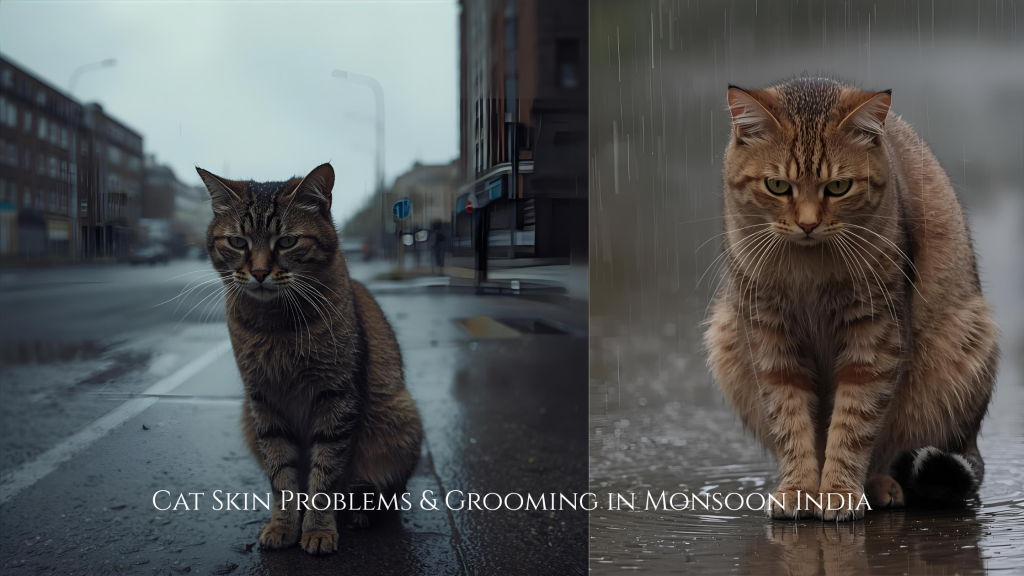
Quick Guide for Cat Parents in Monsoon 2025
Monsoon in India means cooler rains for us, but for cats, it’s often humidity followed by fungus, fleas, and flaky skin. Humidity above 60% creates the perfect breeding ground for Malassezia yeast, Microsporum canis (ringworm), and secondary bacterial infections.
Top 5 Cat Shampoos in India for Monsoon (2025, Amazon.in):
- Himalaya Erina EP – Neem + eucalyptus; antifungal & deodorizing (₹224–490)
- Healthy Paw Life Lime Sulfur Dip – Vet-grade for ringworm & mange (₹361)
- PET PERK Medicated Antifungal Shampoo – Nanotechnology, lick-safe (₹469)
- Caredom Herbal Antifungal Shampoo – Neem, sitaphal, clove blend (₹217)
- Bark Out Loud Allergy Relief Shampoo – Itch-soothing, mild antibacterial (₹273)
Pro Tip: Use medicated shampoos only for active infections (ringworm, yeast, hot spots). For routine care, rotate with herbal or gentle pH-balanced shampoos to protect your cat’s skin barrier.
Part 1: Why Monsoon Worsens Cat Skin Problems in India
Every Indian cat parent notices it: the first rains, and suddenly the scratching begins.
Here’s why:
- Humidity above 65% keeps fur damp → fungi and yeast thrive.
- Closed apartments in Mumbai, Chennai, Kolkata, and Goa trap moisture → ideal for parasites.
- Street-to-balcony contact means fleas/ticks ride in from neighborhood cats.
- Damp bedding and mats hold flea larvae, fungal spores, and bacteria.
Veterinary Data (India 2023–2025):
- Fungal infections in cats increase by 55.5% in the monsoon compared to dry months.
- Microsporum canis is responsible for *60% of ringworm infections in Indian cats.
- Malassezia dermatitis cases spike by *74.8% during humid seasons.
- Flea/tick infestations rise 40–60% in metros during monsoon.
Bottom line: Monsoon skin issues in cats are not bad luck, they’re biology + environment.
Part 2: The Major Cat Skin Problems in Monsoon
1. Fungal Infections (Ringworm & Dermatophytosis)
- Cause: Microsporum canis → thrives in damp fur.
- Symptoms: Circular bald patches, scaling, crusty margins.
- Risks: Zoonotic humans can catch ringworm.
- Treatment:
- Topical: Miconazole + 2% chlorhexidine shampoo (2× weekly, 5–10 min contact).
- Oral: Itraconazole 5mg/kg daily in pulse therapy (7 days on, 7 days off).
- Prevention: Wash bedding hot, sun-dry, and dehumidify rooms.
2. Yeast Infections (Malassezia Dermatitis)
- Cause: Natural yeast on skin overgrows in moisture.
- Symptoms: Greasy fur, musty odor, itchy ears/face/paws.
- Treatment:
- Shampoos: Ketoconazole + 2% chlorhexidine (Virbac Ketochlor).
- Course: 4–6 weeks minimum.
- Signs to Spot Early: Dandruff that turns greasy, yellow/brown waxy debris in the ears.
3. Bacterial Infections (Hot Spots & Pyoderma)
- Cause: Skin stays damp → bacteria invade.
- Symptoms: Red, moist, painful sores that spread rapidly.
- Treatment:
- Topical: Chlorhexidine 3% shampoos.
- Severe: Oral antibiotics (vet-prescribed).
- Prevention: Dry coat within 30 minutes of exposure.
4. Allergic Dermatitis (Seasonal Triggers)
- Cause: Monsoon pollens, molds, mosquito bites.
- Symptoms: Itchy face, ears, and belly → over-grooming.
- Treatment:
- Antihistamines/steroids (vet-only).
- Immunotherapy: 60–78% success in Indian vet trials.
- Home Care: Use air purifiers & dehumidifiers in closed flats.
5. Parasitic Infestations (Fleas & Ticks)
- Cause: Balcony cats, damp corridors, rugs.
- Symptoms: Flea dirt (black specks), intense itching, and flea anemia in kittens.
- Treatment:
- Bath: Cat-safe flea shampoo (Himalaya Erina EP, Bark Out Loud).
- Long-term: Spot-ons (selamectin, fipronil, fluralaner) or oral meds (vet-prescribed).
- Rule: Shampoo kills today’s fleas → preventives stop tomorrow’s.
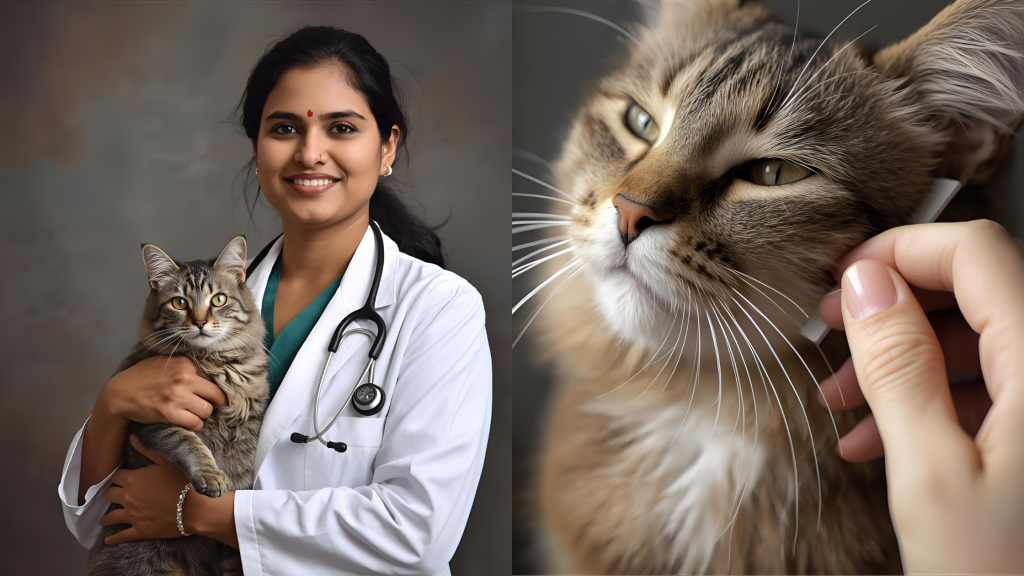
🛁 Part 3: Vet-Safe Grooming Protocol for Monsoon
Cats need extra grooming support in the monsoon, especially Persians, Maine Coons, and long-haired breeds.
Step 1: Brushing (Daily)
- Removes loose fur, reduces mats, speeds drying.
- Best tools: FURminator de-shedding tool, slicker brush.
Step 2: Bathing (Only When Needed)
- Frequency: Once weekly for infections, once every 3–4 weeks for healthy cats.
- Shampoos: Use only cat-labelled, pH-balanced antifungal or herbal shampoos.
- Contact Time: Medicated → 5–10 minutes minimum.
Step 3: Drying (Critical)
- Use a microfiber towel + low-heat dryer.
- Target areas: paws, underbelly, armpits, tail base, ear folds.
- Rule: Cat must be 100% dry within 30 minutes.
Step 4: Paw & Ear Care
- Paws: Wipe after balcony walks; prevent fungal buildup between toes.
- Ears: Weekly clean with vet-approved ear solutions (never pour oils).
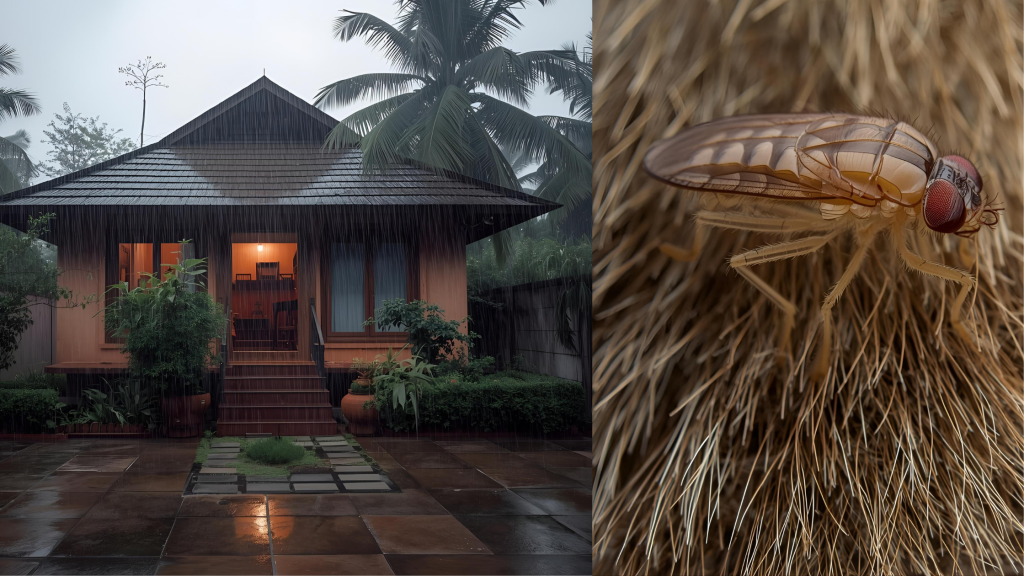
Part 5: The Hidden Enemy (Your Home Environment in Monsoon)
Even the best antifungal shampoo will fail if your cat’s environment is a fungal and flea paradise. In humid Indian homes, 70% of relapse cases come not from the cat itself but from spores, larvae, and bacteria living in fabrics.
Where the Problems Hide in Indian Apartments
- Mats & Rugs → hold flea larvae + fungal spores
- Balcony corners → damp + shaded = yeast growth
- Curtains & sofa covers → flea eggs drop where cats nap
- Bedding → warm + damp fur = perfect fungal incubator
- Litter areas → wet clay litter irritates paws, fuels bacterial infections
Environment Reset Checklist (Indian Monsoon Edition)
- Wash bedding, curtains, and sofa covers weekly (hot wash + sun-dry).
- Vacuum carpets and mattress edges → discard bag after each cycle.
- Mop with pet-safe disinfectants (avoid phenyl, Lysol toxic to cats). Use diluted veterinary disinfectants.
- Sun-bake mats and scratching posts → natural UV kills fungal spores.
- Balcony hygiene: drain potted plant trays, block stray cats.
- Dehumidifier/ceiling fan: keep indoor humidity below 60%.
Pro Tip: Flea pupae can survive 2–3 weeks in humidity. Consistency in cleaning breaks the Flea life cycle.
Part 6: Safe vs Unsafe Grooming Ingredients
Cat parents often assume herbal = safe. In reality, many herbal oils are toxic to cats because their livers cannot metabolize certain compounds.
Cat-Safe Grooming Ingredients (Look For):
- Ketoconazole (1–2%) → antifungal for ringworm, Malassezia
- Miconazole (1–2%) → broad-spectrum antifungal
- Chlorhexidine (2–3%) → antibacterial + antifungal synergy
- Oatmeal → soothing, anti-inflammatory
- Aloe vera (purified gel only) → moisturizing, itch relief
- Neem (diluted, cat-formulated) → antifungal, flea deterrent
- Coconut-derived cleansers → mild surfactants, barrier-safe
Cat-Unsafe Ingredients (Avoid Always):
- Permethrin, Phenothrin (dog actives) → highly toxic, cause seizures/death
- Tea Tree Oil (high concentration) → neurotoxic, causes tremors
- Eucalyptus, Pennyroyal, Wintergreen oils → unsafe metabolism in cats
- Parabens, harsh sulfates → strip natural oils, weaken barrier
- Human medicated shampoos → wrong pH, irritant preservatives
Veterinary Warning (MSD Manual 2025): Even a single lick of concentrated tea tree oil can trigger tremors, lethargy, and liver toxicity in cats.
Part 7: Step-by-Step Grooming Protocol for Monsoon
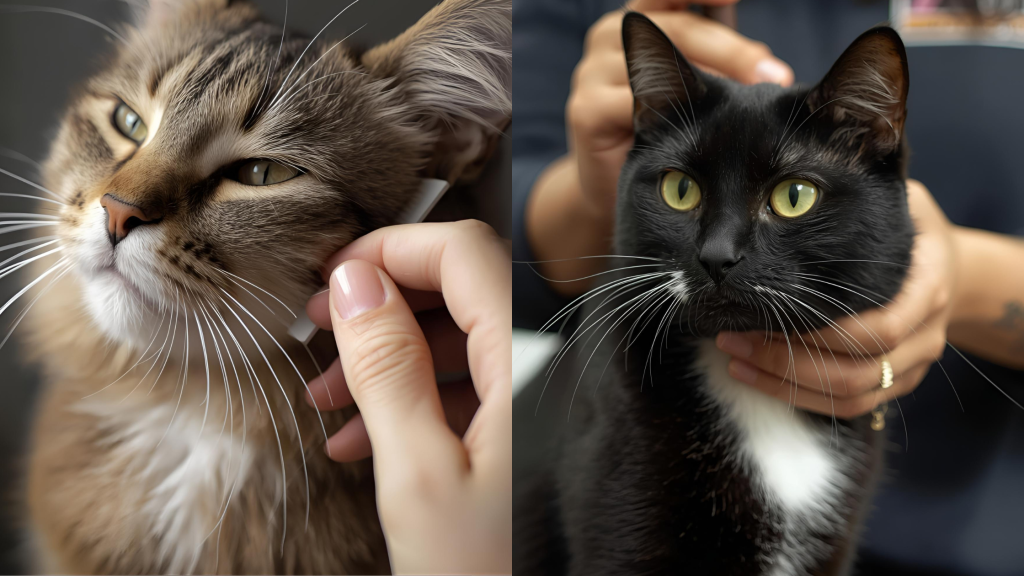
Here’s the vet-approved cat wellness & cat-tolerated grooming protocol for humid months:
Bathing Routine
- Pre-bath Brush → removes mats, speeds drying.
- Collar of Suds → apply shampoo around the neck first to trap fleas/fungi from running to the head.
- Lather & Massage → focus on paws, underbelly, tail base. Avoid the face (use a damp cloth).
- Contact Time → medicated shampoos need 5–10 minutes on fur.
- Rinse Twice → residue = itch fuel. Keep rinsing until water runs clear.
- Dry Completely → towel blot + low-heat dryer. Cat must be 100% dry within 30 minutes.
Daily Grooming
- Brush daily (especially Persians, Maine Coons).
- Paw wipe after balcony exposure.
- Weekly ear check & clean (vet-approved solution only).
Grooming Mistakes That Backfire
- Over-bathing → strips oils, worsens dandruff.
- Leaving fur damp → fuels Malassezia yeast.
- Using dog shampoo → risk of permethrin poisoning.
- DIY oils → unpredictable dose, dangerous.
Part 8: Cat Grooming Products in India
This is the most trusted everyday antifungal option in India. With neem and eucalyptus, it’s designed for routine monsoon cat care, offering both flea support and odor control.
A veterinary-grade classic, lime sulfur remains the gold standard for ringworm and mange. It’s strong but effective, best used under vet guidance for severe fungal outbreaks.
One of the newest entrants, this shampoo uses nanotechnology to improve penetration and is specifically formulated for cats. It’s lick-safe and ideal for sensitive pets who react to harsher medicated formulas.
A herbal blend with neem, sitaphal, and clove extracts, this option is great for mild fungal control and routine maintenance. Indian cat parents like it for its affordability and simple ingredient list.
If your cat struggles with itchy skin or seasonal allergies during the monsoon, this shampoo offers mild antibacterial and soothing effects. It’s not a hardcore medicated wash, but it works well for sensitive skin cases.
Perfect for rainy days when a full bath isn’t possible. This waterless spray helps freshen up the coat, reduce odor, and provide a quick clean without stressing the cat.
Part 9: Special Categories (Kittens, Seniors, Long-Haired Cats)
Kittens (<10 weeks)
- No medicated shampoos (too harsh).
- Use gentle kitten cleanser + flea comb.
- The vet may prescribe kitten-safe preventives.
Senior Cats
- Arthritis reduces grooming ability → daily brushing needed.
- Short, warm baths only if infection is present.
- Barrier-friendly shampoos (oatmeal, aloe).
Long-Haired Cats (Persians, Maine Coons)
- Daily brushing is mandatory in the monsoon.
- Detangle before bathing.
- Use moisturizing shampoos to prevent mats.
Brachycephalic Breeds (Persians, Exotic Shorthairs)
- Clean and dry facial folds after meals.
- Wipe daily to prevent yeast.
Part 10: FAQs Snippet-Optimized
Q1. How often should I bathe my cat during the monsoon?
- Healthy cats: once every 3–4 weeks.
- Infected cats: 2× weekly with antifungal shampoo until cleared.
Q2. What’s the best antifungal shampoo for cats in India?
- Himalaya Erina EP (affordable, herbal, antifungal).
- Lime Sulfur Dip (vet-grade for ringworm).
- PET PERK Medicated (safest for sensitive cats).
Q3. Can I use dog flea shampoo on cats?
- No. Many contain permethrin, which is highly toxic to cats.
Q4. Why does my cat smell yeasty during the monsoon?
- Likely Malassezia dermatitis → needs antifungal shampoo + vet treatment.
Q5. What is the safest natural ingredient for cat skin?
- Diluted neem + aloe vera in cat-formulated shampoos. Never use raw oils.